
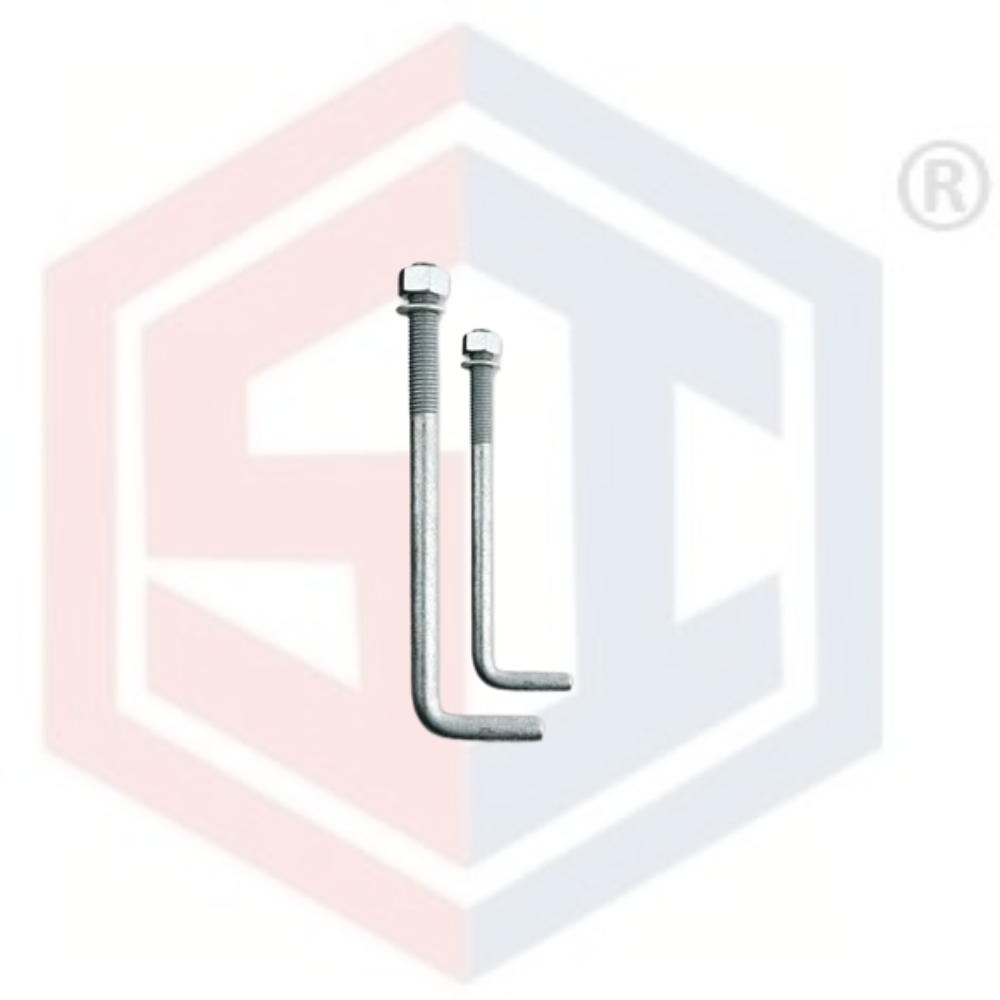
Foundation bolts, also known as anchor bolts or anchor rods, are threaded fasteners used to secure structural elements such as columns, beams, equipment, and machinery to a concrete foundation or footing. These bolts are critical components in construction and industrial applications, providing stability and structural integrity to the entire structure. Here’s an overview of foundation bolts:
Design:
Threaded End: Foundation bolts typically have one end threaded to facilitate attachment to the structure being anchored. The threads may be either partially or fully threaded, depending on the specific application requirements.
Non-threaded End: The opposite end of the foundation bolt is typically embedded into the concrete foundation or footing. This end may be plain or have specific features such as a square plate or bent anchor to prevent the bolt from pulling out of the concrete.
Types:
J-Bolts: J-bolts have a J-shaped bend at the embedded end, providing resistance against pull-out forces. They are commonly used for light to medium-duty applications.
L-Bolts: L-bolts have an L-shaped bend at the embedded end, providing increased resistance against pull-out forces compared to J-bolts. They are suitable for medium to heavy-duty applications.
U-Bolts: U-bolts have a U-shaped bend at the embedded end, making them ideal for securing pipes, conduits, and other cylindrical objects to concrete foundations or surfaces.
Installation:
Placement: Foundation bolts are typically installed into pre-drilled holes in the concrete foundation or footing before it sets. Proper alignment and spacing of the bolts are essential to ensure accurate placement and alignment of the structural elements.
Anchoring: Once the foundation bolts are installed, they are secured in place by pouring concrete around them. The concrete sets, encapsulating the embedded ends of the bolts and providing a secure anchoring point.
Applications:
Building Construction: Foundation bolts are used in the construction of buildings, bridges, towers, and other structures to anchor structural elements such as columns, beams, and walls to concrete foundations.
Industrial Machinery: They are used to secure heavy machinery, equipment, and industrial processes to concrete floors or foundations in factories, manufacturing plants, and industrial facilities.
Utility Structures: Foundation bolts are employed in the installation of utility poles, transmission towers, and telecommunications equipment to anchor them securely to concrete footings or pads.
Advantages:
Stability: Foundation bolts provide stability and structural integrity by securely anchoring structural elements to concrete foundations, preventing movement and ensuring the safety of the structure.
Versatility: Foundation bolts are available in various sizes, lengths, and configurations to accommodate different applications and structural requirements.
Durability: When properly installed, foundation bolts provide long-lasting and reliable anchoring solutions, withstanding the rigors of heavy loads, vibrations, and environmental conditions.
Foundation bolts are essential components in construction and industrial projects, providing a secure and reliable means of anchoring structural elements to concrete foundations. Proper selection, installation, and maintenance of foundation bolts are crucial to ensure the structural integrity and safety of the entire structure.